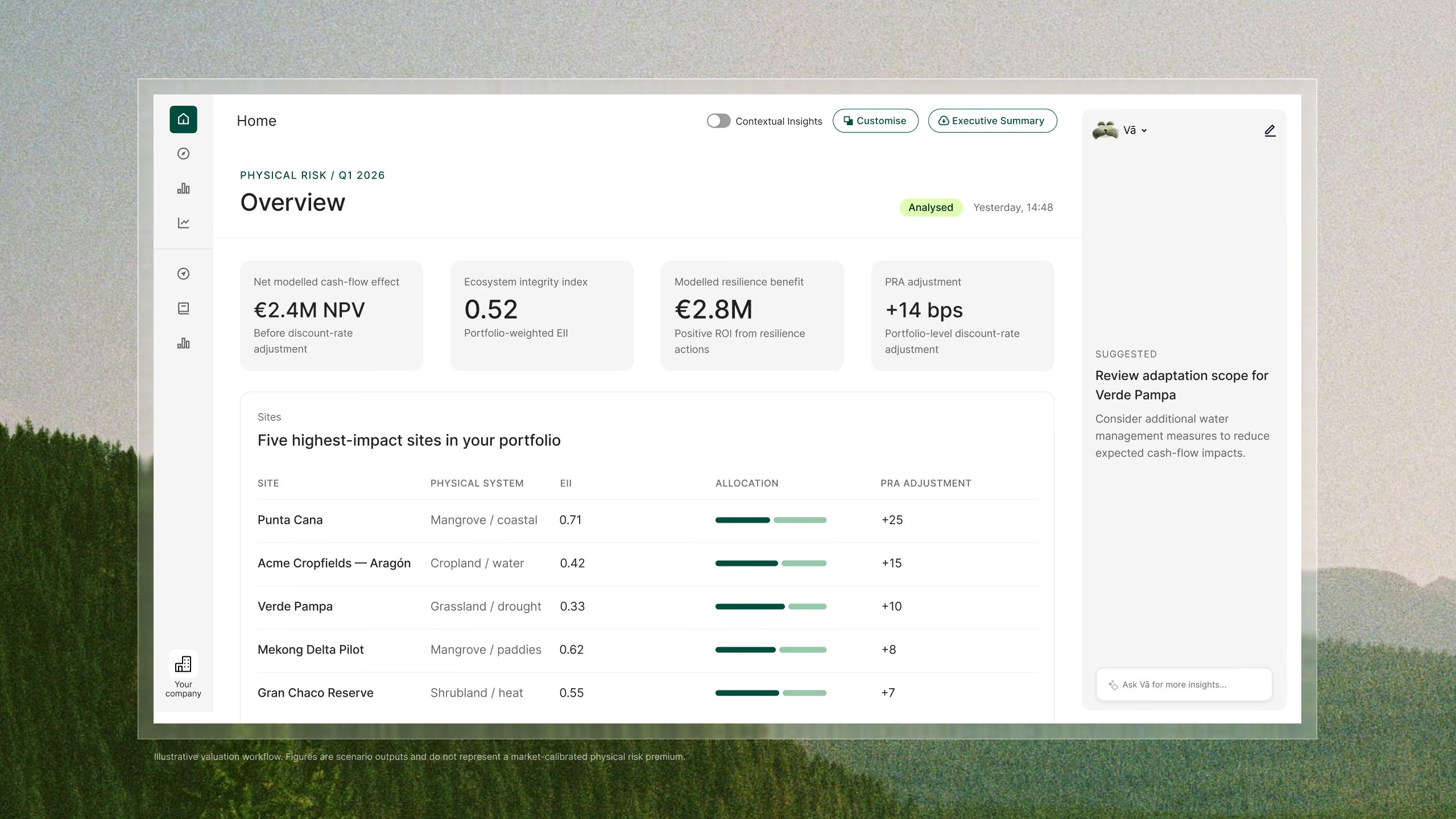
Gain the ability to price physical risk
Physical risk is already reflected in some financial inputs, but its transmission remains partial and uneven. TLG’s framework traces risk from hazard, physical exposure and physical vulnerability, through dependency and operational flexibility, into the cash flows and required returns of a specific financial claim. It helps investors recognise material exposure that conventional valuation inputs may not yet represent fully.
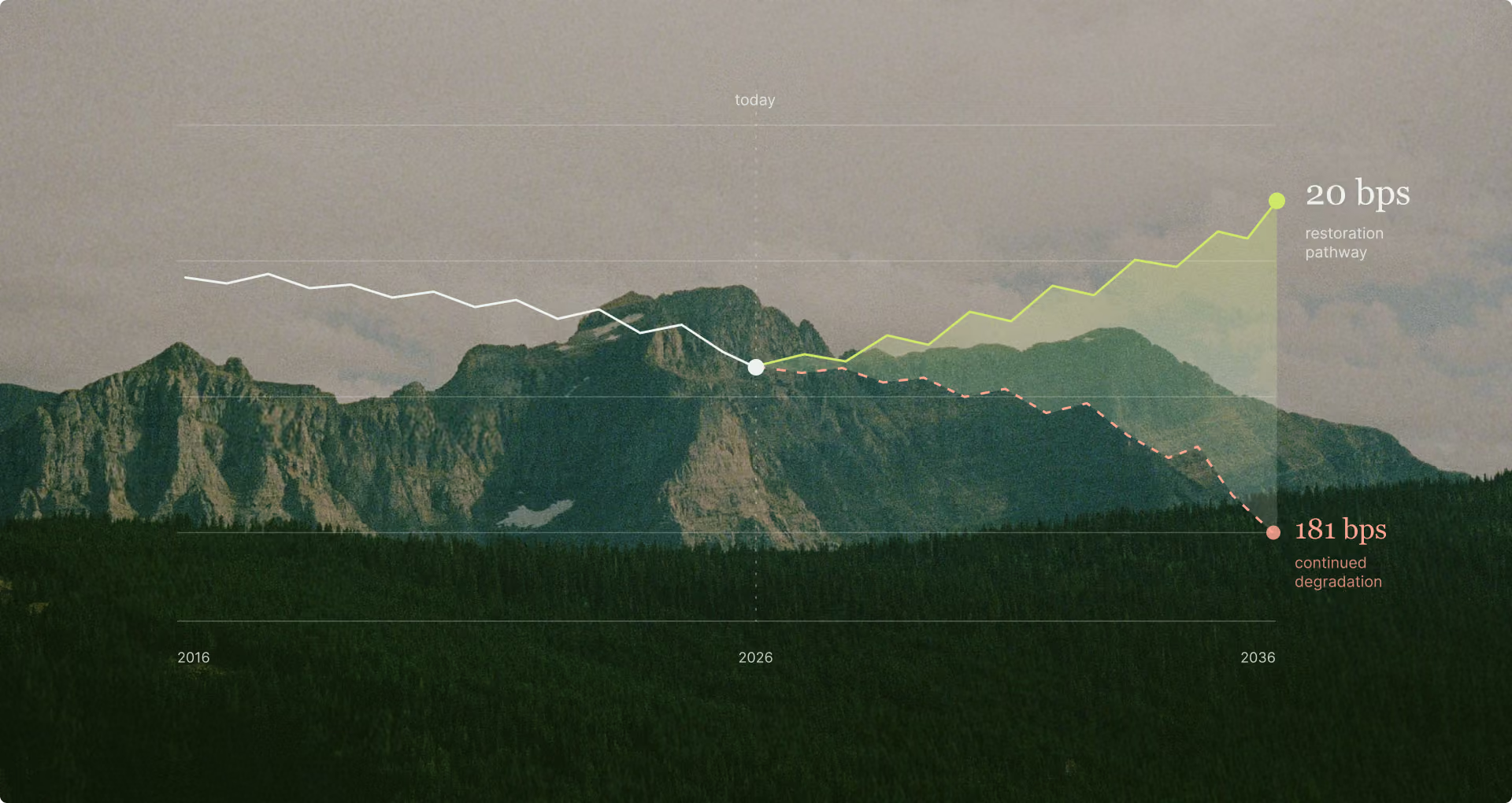

Physical risk is only partially reflected in financial prices
Unevenly reflected in the inputs
Ecological condition can change hazard or vulnerability
Disclosure without price
Physical Risk Adjustment (PRA): a holder-specific treatment of residual physical risk
The PRA is an additive adjustment to the cost of equity used principally in holder-specific valuation. It applies only to material physical risk that remains outside expected cash flows and the baseline required return, is demonstrably borne by the relevant holder, and has not already been compensated through beta, total beta or another adjustment. Its current calibration is a judgemental shadow price—not an empirically estimated market premium.
PRA = judgemental shadow-pricing adjustment for an eligible holder-specific residual.
PRP = potential market compensation for systematic physical risk borne by diversified investors.
The current evidence does not yet support calibration of a standalone PRP.
For credit: translate the same upstream risk through the debt claim
The upstream physical and economic assessment is common across financial applications. Credit analysis then translates that risk through earnings capacity, liquidity, debt-service capacity, collateral value and recovery prospects. Where the evidence supports the relationship, these consequences can inform PD, LGD, spreads, covenants and tenor.
Sector-informed, refined to the activity
Sector-level dependency evidence can provide a practical prior where company-specific information is unavailable. Firm-, asset- and activity-specific evidence should replace that prior where possible, particularly evidence on dependency, operational flexibility and the physical mechanism being assessed.
Where it applies
Equity valuation / DCF
Portfolio screening
ESG / sustainability integration
Credit assessment
Credit rating calibration
Loan structuring
Built for you in Landler
The framework runs in Landler as a custom build, scoped around your assessment units, hazards, activities, portfolio, financial claims and valuation purpose.
Book a consultation